



Welcome to SaltWise

Your digital hub for sustainable saline soil management.

Learn About Salinity

About

Discover the platform

Farming Practices

Agroecological Practices

Step-by-step sustainable methods

Library

Knowledge Library

Research papers & guides

Soil Analysis

Diagnose Your Soil

Get personalized recommendations

Community

Community Forum

Connect with other farmers

Marketplace

Events & Marketplace

Trainings and eco-products

Understanding Salt-Affected Soils

Origin, Classification, and Distribution

Salt-affected soils are found across all continents and in nearly every climate. However, their distribution is more extensive in arid and semi-arid regions compared to humid areas. The nature and characteristics of these soils vary widely, requiring tailored approaches for their reclamation and management to ensure long-term productivity.

Origin of Salts

The presence of excessive salts on the surface and within the root zone defines saline soils. The primary source of all salts in the soil originates from the earth's crust, specifically from primary minerals exposed on the surface.

Classification

Saline Soils

High concentrations of soluble salts (EC > 4 dS/m) with pH < 8.5

Sodic Soils

High sodium content (ESP > 15%) with pH > 8.5
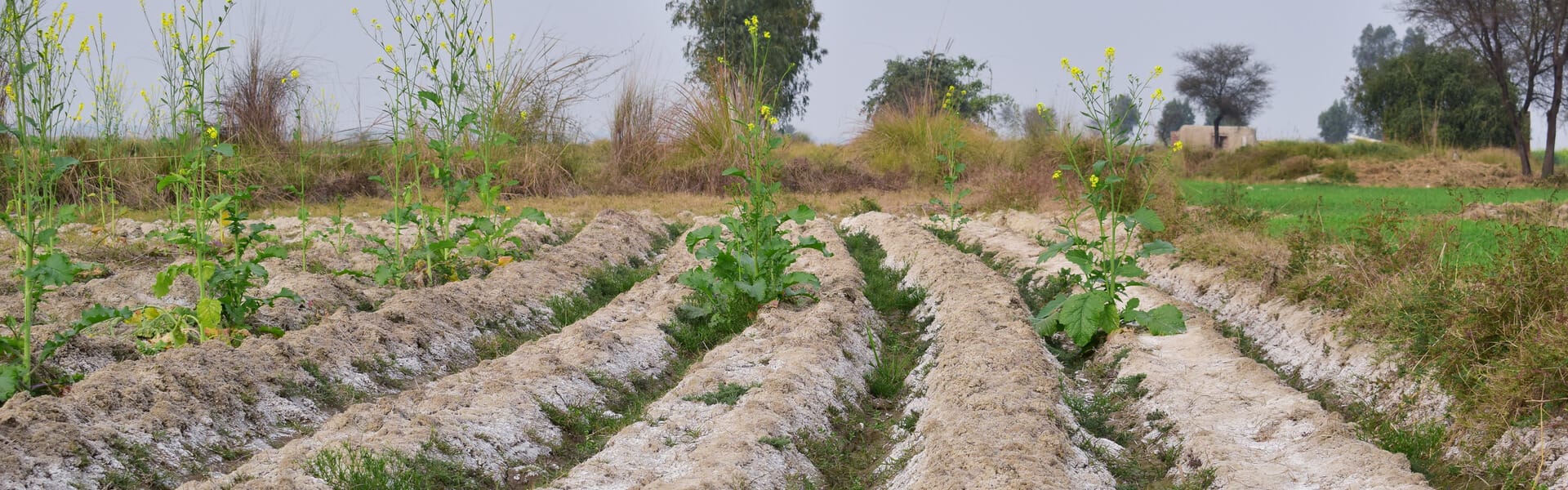
Salt-Affected Soil

Visual representation of salt-affected soil

Causes of Soil Salinity

Natural Causes

  • Mineral weathering
  • Sea water intrusion
  • Atmospheric deposition

Human Activities

  • Improper irrigation
  • Deforestation
  • Overuse of fertilizers

Effects of Soil Salinity

On Plants

  • Osmotic stress
  • Nutrient imbalance
  • Reduced growth

On Soil

  • Poor structure
  • Reduced permeability
  • Decreased fertility